Certified Translation vs Notarised Translation Explained

When dealing with official documents in the UK or abroad, one of the most common questions is:
Do I need a certified translation or a notarised translation?
The answer depends on who is requesting the document and for what purpose. Choosing the wrong option can lead to delays, rejections, or unnecessary costs.
In this guide, we’ll clearly explain the difference between certified translations and notarised translations, when each is required, and how to ensure your documents are accepted the first time.
What is a Certified Translation?
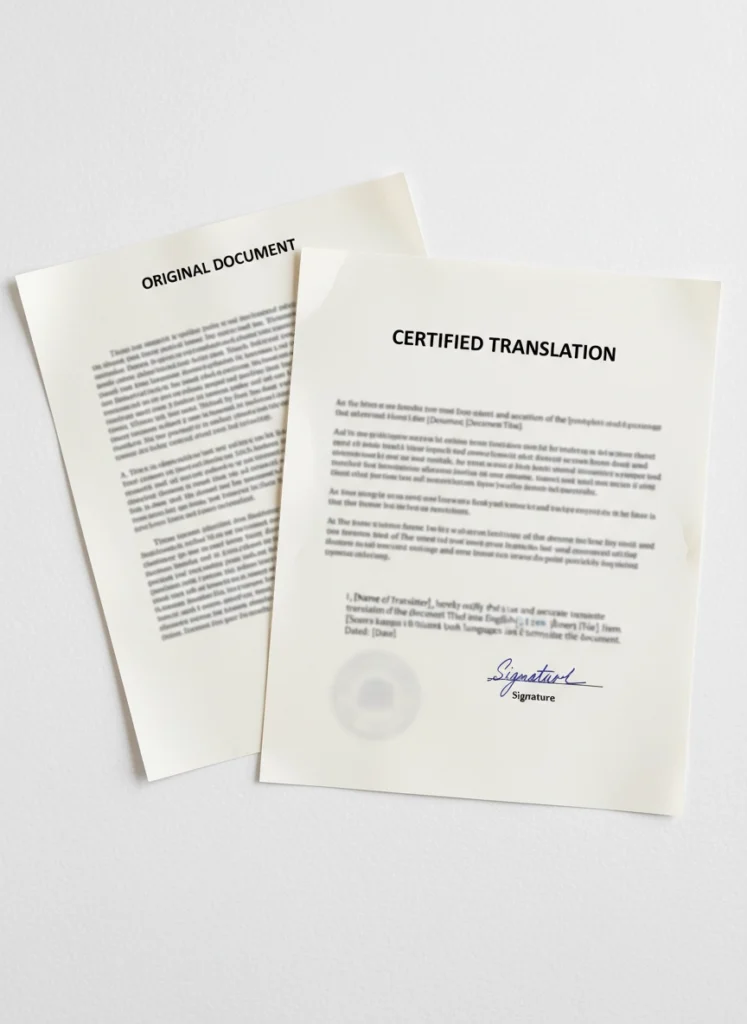
A certified translation is a professionally translated document accompanied by a signed certification statement confirming that:
- The translation is accurate and complete
- It faithfully represents the original document
- It has been completed by a qualified translator or translation agency
In the UK, certified translations are widely accepted and commonly required by:
- UK Visas and Immigration (UKVI)
- The Home Office
- Universities and academic institutions
- Employers and professional bodies
- Local councils and government departments
- Solicitors and courts
Certified translations are typically sufficient for most UK-based applications.

What Is a Notarised Translation?
A notarised translation is a certified translation that has been additionally verified by a Notary Public.
In this case:
- The translator or agency signs a certification statement
- A Notary Public verifies the identity of the signer
- The notary applies an official stamp and signature
Importantly, the notary does not check the accuracy of the translation — they only confirm the authenticity of the certification.
Notarised translations are usually required for:
- Documents being used outside the UK
- Foreign embassies and consulates
- International legal or business transactions
- Overseas property purchases
- Certain court or governmental authorities abroad
Certified Translation vs Notarised Translation: Key Differences
Certified Translation
Required for most UK applications
Accepted by UKVI, Home Office, universities, employers
Includes a signed certification statement
Faster and more cost-effective
Often available same-day
Notarised Translation
Required mainly for international use
Involves a Notary Public
Includes notarisation stamp and signature
More expensive than certified translation
Slightly longer processing time
Which One Do You Need?
Which One Do You Need?
You should choose a certified translation if you are:
- Applying for a UK visa or settlement
- Submitting documents to the Home Office
- Enrolling at a UK university
- Starting a job in the UK
- Dealing with UK legal or administrative bodies
You may need a notarised translation if you are:
- Submitting documents to a foreign authority
- Applying for visas outside the UK
- Handling overseas legal or business matters
- Dealing with international courts or institutions
When in doubt, always check the requirements of the organisation requesting your documents.

Are Certified and Notarised Translations Accepted in the UK?
Yes — certified translations are fully accepted in the UK when completed by a professional translation service and when they meet official requirements.
Notarised translations are not usually required for UK authorities, unless specifically requested.
Always ensure your translation includes:
- A clear certification statement
- Translator or agency name and contact details
- Date and signature
- Compliance with UKVI or institutional guidelines
Why Use a Professional Translation Service in London?
Choosing a London-based certified translation service offers several advantages:
- Expertise in UK immigration and legal standards
- Clear guidance on whether certification or notarisation is required
- Fast turnaround options, including same-day service
- Secure handling of sensitive documents
- Easy communication during UK business hours
A professional service can also arrange notarisation if needed, saving you time and hassle.
Final Thoughts
Understanding the difference between certified translation and notarised translation is essential when submitting official documents. While certified translations are sufficient for most UK purposes, notarised translations are typically required for international use.
By choosing the correct type of translation from the start, you can avoid delays, rejections, and unnecessary expenses.
If you’re unsure which option you need, working with an experienced London-based translation provider ensures your documents are prepared correctly, accepted promptly, and delivered on time.